The Bronze Casting Process

The Bronze Casting Process

Posted by on Apr 3, 2011 in Open Category |

A steel armature is fabricated that will function as a ”skeleton” to hold the weight of the clay
The piece is sculpted using an oil based clay
The piece is worked and reworked until both the artist and client are pleased
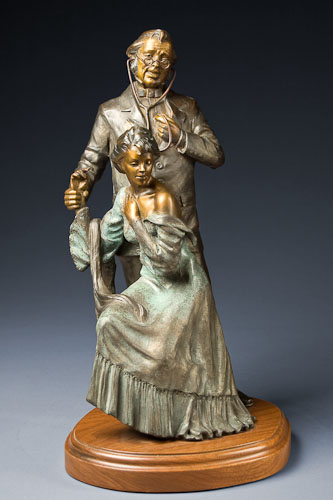
The finished life-size sculpture
Thin sheets of metal are used to divide the sculpture in to a predetermined number of sections
A latex rubber is applied to the clay sculpture.  5-6 coats are used to build up a sufficient thickness
The molds are backed with plaster, which will give rigidity and support to the rubber
The plaster pieces are removed and the latex is cut down the center to create a two section mold
A finished set of Molds
The molds are coated with wax to create a copy of the clay original
Wax is poured in, the mold is rotated to evenly coat, and the excess wax is poured out. This will create a hollow replica
A finished wax being removed from the mold
One finished wax piece
The pieces are touched up and wax runners and a wax cup are attached.  The cup and runners will later act as funneling system to enable the bronze to reach the piece
The pieces are coated in a liquid ceramic and allowed to dry.  This will be repeated 7-8 times to build a thick ceramic shell.  The shell becomes another mold
Finishing the first coat
The piece is next coated in sand. This will help dry it quicker and add mass to the ceramic
The ceramic is chipped away from the bottom of the cup gaining access to the wax.  The piece is heated and the wax melts, leaving a hollow ceramic shell
The mold is now hollow and ready for bronze to be poured in
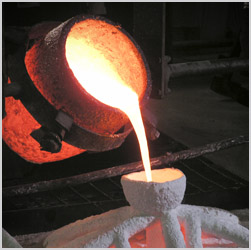
20 lbs. bronze ingots will be melted and poured into the shells
The bronze is melted in a crucible in a furnace to over 2000 degrees
The ceramic shell are also heated, to prevent them from shattering from the shock of the molten bronze
The shells are removed from the oven and place in a sand filled box with the cup facing up
The cup acts as a funnel and the runners carry the bronze to the piece
Once cooled, the ceramic shell is chipped away. Then the cup and runners will be cut off
A finished set of bronze pieces ready to be reassembled
Using heli-arch welders the bronze pieces are welded back together.  The sculpture is ground and polished to create a seamless finish
The sculpture is heated and treated with chemicals that oxidize the bronze changing its color to the desired effect
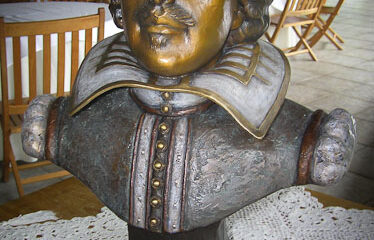
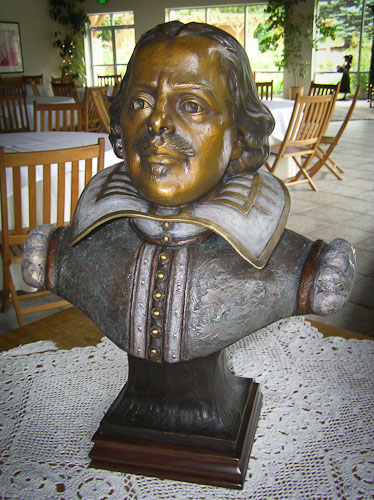
The finished piece is not only beautiful but strong and durable able to last generations!
Read More

Kraig Varner (bio)

Kraig Varner (bio)

Posted by on Apr 3, 2011 in Kraig Varner |

Kraig Varner is a successful sculptor who distinguishes himself from others by his ability to master a range of sculpting genres from figurative, to contemporary, to portrait work. This ability has made his work recognized and sought after in different spheres of influence.

An ability to create moving, emotion filled portraits, of current and historical figures, has made his work important as a historian, capturing the triumph of the human spirit in each of the subjects he sculpts.

His contemporary work is rich with symbolism and meaning. It conveys poignant aspects of the human experience and emotion. Kraig has a passion for the human form. He believes his work helps us see and feel the world around us and our place and interface in this world.

You only need to work with Kraig for a moment and you see that his vision and dreams are bigger somehow than can be held in one medium, or controlled within limited boundaries.

Kraig is a man with deep and lasting commitments to the principles that have guided and shaped his life. His beliefs about himself and his place and purpose show in his character. His passion for expressing himself through his art has always had a core place in this inward motivation. His passion for life, his ability to have fun, and his willingness to share all the gifts that he has, are a blessing to those who know and associate with him.

Kraig is best known for the life-size or heroic size sculptures that adorn many locations around the State of Utah.   He has been commissioned for many significant works. Most notable are the 9′ Brigham Young in the State Capital, the Statue of former Govern Matheson in the Federal Building in Down Town Salt Lake City, the James LeVoy Sorenson monument that adorns the entrance of the corporate headquarters of the Medical Institution he pioneered and the “Children of Lights ” Sculpture – an image from the 2002 Salt Lake Olympic Games.

Kraig’s work has been shown in national and international exhibitions, and his work is located in collections throughout the world. He has been commissioned to sculpt portraits and monumental works alike for universities, municipalities, foundations and corporations.

Read More

Jerry Anderson (bio)

Jerry Anderson (bio)

Posted by on Apr 1, 2011 in Jerry Anderson |

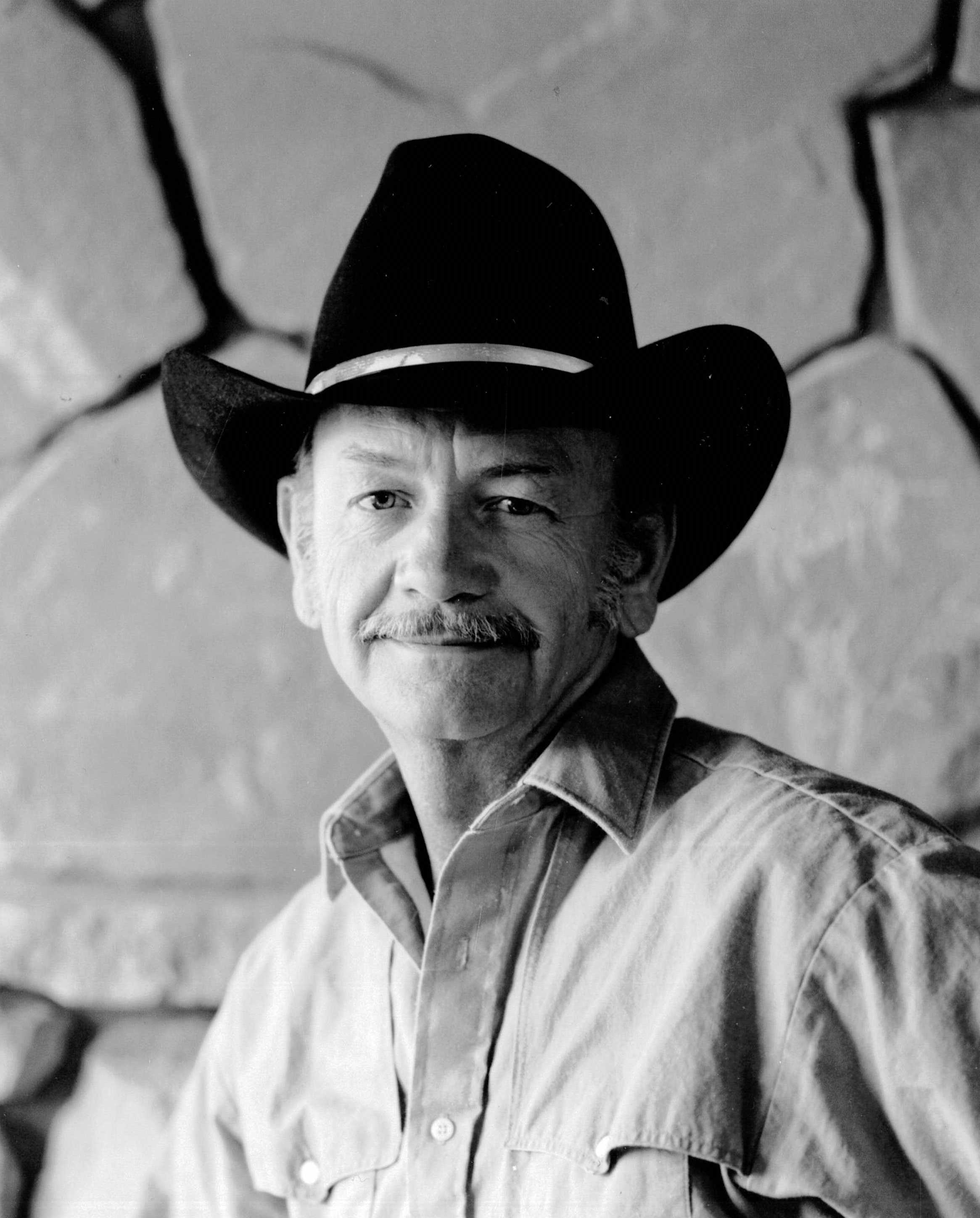
Since beginning his full-time pursuit of fine art, Jerry Anderson has quickly climbed the ladder of success.  His work has been featured in many major art magazines, and he is a multiple award winner at some of the top Western art shows.  He has twice won “Best of Show” in sculpture at the prestigious Western Artists of America annual exhibition, and “Best of Show” at the American-Canadian Classic in Billings, Montana.   He won first place and “People’s Choice” at the Death Valley 49er’s show in California, and his work can be found in collections from coast to coast, including the prestigious Favell Museum collection in Oregon where he was given the “Western Heritage Award”.

Every piece is a new adventure for Anderson.  No two are even remotely alike.  He is equally adept at bear and elk as he is at cute little girls and cowboys.  One of his most popular pieces ever, “Showdown,” captures a cowboy with rifle in hand, dismounting his horse.  This limited edition piece of 30 sold out. 

There is always a new piece in progress, molding clay into life, and turning ideas into history.  What keeps him coming back to the studio?  “I still haven’t done my best piece,” he says.

Read More